
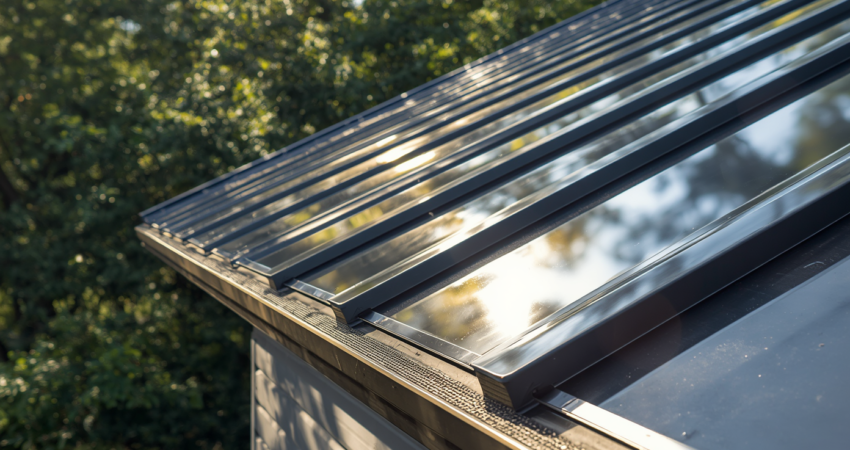
Metal roof drip edge flashing is a narrow strip of metal installed along the edges of a roof to direct water away from the fascia and into the gutters. Drip edge prevents moisture damage, protects the roof deck, and is required by most building codes. Without it, even a well-built roof is vulnerable to rot and structural decay.
Your roof can have the best shingles money can buy and still fail prematurely without one small, often-overlooked component: the drip edge. This thin strip of metal does quiet but critical work, guiding water off your roof and away from the materials beneath it. Skip it, and you’re inviting rot, mold, and costly repairs.
At Tier 1 Roofing and Exteriors, we’ve seen what happens when drip edge flashing is installed incorrectly—or not at all. This guide covers everything homeowners need to know: what metal roof drip edge flashing is, why it matters, where it goes, and what to look for when hiring a contractor.
What Is Metal Roof Drip Edge Flashing?
Metal roof drip edge flashing—also called roof drip cap flashing or metal eaves flashing—is a continuous strip of formed metal installed along the eaves and rakes of a roof. Its purpose is to control where water goes when it runs off the roof surface.
Without a drip edge, water follows the path of least resistance. That path often leads directly behind the fascia board and into the roof deck the structural layer beneath your shingles. Over time, that moisture causes wood rot, weakens the roof structure, and creates conditions for mold growth.
Drip edge flashing gives water a controlled exit point, directing it forward and into the gutters where it belongs.
What Is Metal Roof Drip Edge Flashing Made Of?
Drip edge is most commonly made from:
- Aluminum: Lightweight, rust-resistant, and the most widely used option for residential roofing
- Galvanized steel: More durable than aluminum, suitable for areas with heavy wind or hail exposure
- Copper: Premium option with natural corrosion resistance; often used on high-end or historic homes
Most residential drip edges are formed in an “L” or “T” shape, with one leg sitting flat against the roof deck and the other hanging over the edge to channel water away from the fascia.
Why Is Drip Edge Flashing Important for Metal Roofs?
Metal roofing systems are known for their longevity—quality metal roofs can last 40 to 70 years. But that lifespan depends on proper installation of every component, including metal eaves flashing.
Here’s what drip edge flashing specifically protects against:
Water infiltration under the roofing material. On metal roofs, wind-driven rain can push water back up under the panels. A properly installed metal roof drip edge creates a physical barrier that blocks this pathway.
Fascia board damage. The fascia runs along the roofline and supports the bottom row of tiles or panels, as well as the gutters. Without drip edge, water repeatedly soaks the fascia, causing wood rot that can compromise gutter attachment and the structural edge of the roof.
Ice dam damage in cold climates. In regions with freezing winters, ice dams form when snow melts and refreezes at the roof’s edge. Metal eaves flashing helps manage this cycle by providing a hard surface for ice to form on—rather than allowing water to seep into the roof deck.
Pest entry points. Gaps at the roof edge without drip edge installed can become entry points for insects and small animals. A continuous metal strip closes off these openings.
Is Drip Edge Required by Building Code?
Yes—in most jurisdictions across the United States, drip edge is required. The International Residential Code (IRC) mandates drip edge installation at eaves and rakes for most roofing systems. Many state and local codes have adopted this requirement, and failure to install drip edge can result in a failed inspection.
Beyond code compliance, most roofing manufacturer warranties also require drip edge installation as a condition of coverage. Skipping it could void your warranty entirely—regardless of the quality of the panels or shingles installed above.
If you’re unsure about the requirements in your area, a licensed contractor from Tier 1 Roofing and Exteriors can confirm local code requirements before work begins.
Where Does Drip Edge Go on a Roof?
Drip edge is installed in two locations:
Along the Eaves (Bottom Edge of the Roof)
At the eaves, metal eaves flashing is installed before the underlayment. The drip edge sits directly on the roof deck, and the underlayment is then layered on top of it. This sequence ensures that any water penetrating the roofing surface runs over the underlayment and directly onto the drip edge—not behind it.
Along the Rakes (Sloped Sides of the Roof)
At the rakes, the installation order is reversed. The underlayment goes down first, and the drip edge is installed on top of it. This prevents wind-driven rain from pushing water under the underlayment along the roof’s sloped edges.
Getting this sequence right matters. Reversed installation—even by a small margin—can undermine the entire water management system.
What Does Proper Drip Edge Installation Look Like?
Knowing what to look for helps you evaluate whether a contractor has done the job correctly.
Overlap. Each piece of drip edge should overlap the adjacent piece by at least 2 inches to prevent gaps where water can infiltrate.
Fastening. Drip edge should be nailed or screwed to the roof deck at regular intervals—typically every 10 to 12 inches. Loose or improperly fastened drip edge can lift in high winds.
Overhang. The drip edge should extend approximately ¼ to ⅜ inch beyond the fascia. Too little overhang allows water to wick back against the wood; too much can cause water to miss the gutter entirely.
Continuity. There should be no gaps along the full perimeter of the roof edge. Any break in the drip edge is a potential entry point for moisture.
Material match. On metal roofing systems, the drip edge material should be compatible with the roofing panels to prevent galvanic corrosion—a chemical reaction that occurs when dissimilar metals make contact in the presence of moisture.
How Much Does Drip Edge Flashing Cost?
Drip edge is one of the most cost-effective components in any roofing system. Material costs typically range from $1 to $3 per linear foot depending on the material (aluminum, steel, or copper) and profile. For a standard 2,000-square-foot home, total drip edge material costs often fall between $100 and $300.
Labor adds to this figure, but because drip edge installation is performed as part of a full roofing project, it rarely represents a significant portion of the overall job cost.
Compared to the cost of repairing water-damaged fascia boards, roof decking, or interior ceilings—which can run into the thousands—drip edge is among the highest-value investments in the roofing system.
Common Drip Edge Mistakes to Avoid
Even experienced roofers can cut corners on flashing details. Watch out for these common errors:
- Wrong installation sequence: Installing drip edge over the underlayment at the eaves, or under the underlayment at the rakes, reverses the water flow path
- Skipping the rakes entirely: Some contractors install drip edge only at the eaves, leaving the rake edges exposed
- Using incompatible metals: Pairing aluminum drip edge with copper flashing or fasteners leads to galvanic corrosion
- Insufficient fastening: Drip edge that isn’t firmly secured can peel back in wind events, creating gaps and exposing the roof edge to water
These aren’t cosmetic issues—they’re functional failures that compromise the entire roof system.
Frequently Asked Questions About Metal Roof Drip Edge Flashing
What is the purpose of drip edge on a metal roof?
Drip edge directs water away from the fascia and into the gutters, preventing moisture from infiltrating the roof deck or soaking into wood components at the roof’s edge. On metal roofs, drip edge also helps manage wind-driven rain that can push water back under the roofing panels.
Is drip edge required on a metal roof?
Yes. The International Residential Code (IRC) requires drip edge installation at eaves and rakes for most residential roofing systems. Most roofing manufacturer warranties also require it. Skipping drip edge can result in failed inspections and voided warranties.
What is the difference between drip edge and roof drip cap flashing?
The terms are often used interchangeably. Roof drip cap flashing and drip edge both refer to the metal strip installed at the roof’s edge to control water runoff. “Drip cap” is sometimes used specifically for the L-shaped profile installed at the top of windows and doors, but in roofing contexts the terms typically describe the same product.
Where should drip edge be installed on a metal roof?
Drip edge should be installed along the eaves (bottom edges) and the rakes (sloped sides) of the roof. At the eaves, it goes under the underlayment. At the rakes, it goes over the underlayment. This sequence ensures water is always directed outward and away from the structure.
How long does metal roof drip edge flashing last?
Aluminum drip edge typically lasts 20 to 30 years. Galvanized steel can last longer in appropriate climates. Copper drip edge can last 50 years or more. In most cases, drip edge is replaced when the roof itself is replaced.
Can drip edge be added to an existing metal roof?
Yes, drip edge can be retrofitted to an existing roof, though it is easier and more cost-effective to install it during a full roofing project. A roofing contractor will need to lift the edge of the roofing panels or shingles to properly position and fasten the drip edge.
Protect Your Roof From the Edge Up
Drip edge might be one of the smallest components on a roof, but its impact is outsized. Metal roof drip edge flashing protects the fascia, the roof deck, and the structural integrity of your home by controlling where water goes every time it rains.
Installed correctly, drip edge is nearly invisible. Installed incorrectly or not at all its absence becomes very apparent, often in the form of rot, leaks, or a failed inspection.
At Tier 1 Roofing and Exteriors, proper drip edge installation is standard on every project. If you’re planning a new metal roof, replacing an existing one, or concerned about the condition of your current flashing, our team can assess what you have and make sure every edge is protected.