
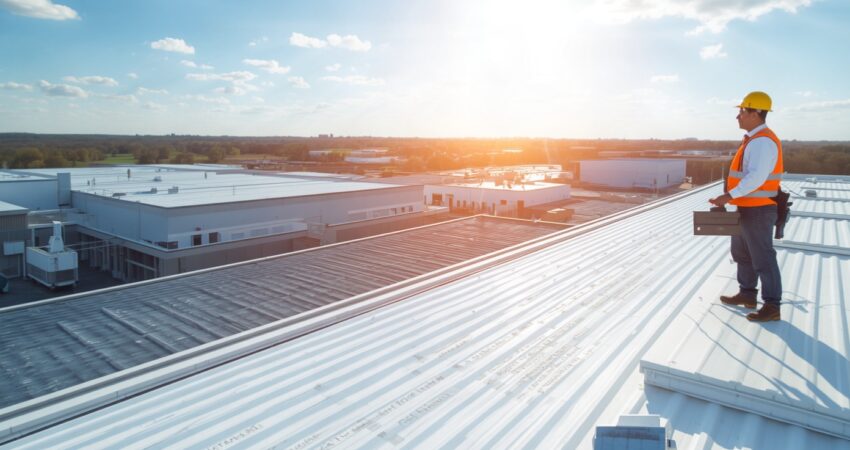
Ohio businesses should inspect their commercial roofs at least twice per year spring and fall to catch damage early and avoid costly repairs. A structured commercial roof maintenance program that includes leak checks, drainage cleaning, membrane inspections, and roof coating can extend roof life by years and save thousands in emergency repair costs.
A commercial roof is one of the largest investments a business owner or property manager will ever make. Depending on the size of the building and the materials used, a new commercial roof can cost tens of thousands of dollars. That’s not a figure anyone wants to replace ahead of schedule.
Yet many Ohio businesses unintentionally shorten their roof’s lifespan by skipping routine maintenance. A small crack in a membrane, a clogged drain, or deteriorating flashing might seem minor—until a winter storm turns a $500 repair into a $50,000 replacement. By then, the damage extends beyond the roof itself: ruined inventory, disrupted operations, and unhappy tenants or employees.
Ohio’s climate adds another layer of urgency. Cincinnati, Dayton, Mason, and the broader Southwest Ohio region experience freeze-thaw cycles in winter, heavy spring rainfall, intense summer UV exposure, and the occasional severe thunderstorm. Each season puts stress on a commercial roof in different ways. Without a consistent maintenance program, that stress accumulates—and eventually, it wins.
This guide covers everything you need to know about commercial roof maintenance in Cincinnati, OH: what to check, when to check it, how often to schedule inspections, and when to call in the professionals. Working with a qualified commercial roofing contractor Cincinnati OH from the start is the most reliable way to stay ahead of problems before they become emergencies.
Why Commercial Roof Maintenance Is Important for Ohio Businesses
Skipping maintenance might save time today, but the financial consequences tend to catch up quickly. Here’s what’s at stake for commercial property owners in Ohio who let regular upkeep slide:
Shortened roof lifespan. A properly maintained TPO or EPDM flat roof can last 20–30 years. Without regular attention, that same roof may fail in 10–15 years. Commercial roof maintenance in Cincinnati, OH is the single most effective way to protect that investment.
Unexpected and expensive repairs. Small issues—a loose seam, minor ponding water, deteriorating flashing—are cheap to fix when caught early. Left unaddressed, those same issues can compromise the roof’s structural integrity and require full section replacements.
Interior damage to inventory, equipment, and employees. A leaking roof doesn’t just damage the roof. Water intrusion affects insulation, drywall, electrical systems, flooring, and anything stored beneath the leak. For a manufacturing facility, restaurant, or retail space, that damage can halt operations entirely.
Higher energy bills. Damaged or aging roof membranes lose their insulating and reflective properties. This forces HVAC systems to work harder, driving up energy costs year-round.
Premature full replacement. The most avoidable outcome of deferred maintenance is a full roof replacement years ahead of schedule—a cost that proper upkeep could have delayed significantly.
Commercial Roof Maintenance Checklist for Business Owners
Use this checklist as a starting point for managing your commercial building’s roof health throughout the year.
Schedule Regular Commercial Roof Inspections
Frequency matters. For most commercial properties in Ohio, two formal inspections per year—one in spring and one in fall—provide the minimum coverage needed to stay ahead of seasonal damage.
Spring inspections assess any damage caused by winter snow loads, ice, and freeze-thaw cycles. Fall inspections prepare the roof for the coming winter and clear any debris accumulated over summer. A qualified commercial roof inspection in Cincinnati, Ohio will cover the entire roof surface, all flashings, drainage systems, penetrations, and interior ceiling areas.
Beyond the scheduled biannual visits, always request an inspection after a severe storm. Hail, high winds, and heavy rainfall can cause damage that isn’t immediately visible from the ground.
Check for Roof Leaks and Water Damage
Roof leaks rarely announce themselves loudly. More often, they reveal themselves gradually through subtle warning signs:
- Ceiling stains or discoloration inside the building
- Moisture buildup around HVAC units or vents
- Mold or mildew growth on interior walls or ceilings
- Musty odors in enclosed spaces
- Damaged or compressed insulation in the attic or ceiling cavity
If any of these signs appear, don’t wait. Water intrusion spreads quickly through insulation and structural materials, and the cost of remediation grows fast. Commercial roof leak repair in Dayton, Ohio and Cincinnati-area properties is far less expensive when addressed promptly rather than after water has migrated through multiple building layers.
Clean Gutters, Drains, and Roof Drainage Systems
Flat roofs depend almost entirely on their drainage systems to shed water. When gutters, internal drains, or downspouts become clogged with leaves, dirt, or debris, water pools on the roof surface.
Standing water—known as ponding—is one of the leading causes of premature flat roof failure. Even a few inches of standing water exerts significant weight on the roof structure. Over time, it degrades membranes, creates ideal conditions for mold growth, and can eventually lead to structural damage.
Clean all drains, gutters, and downspouts at least twice per year. In areas with heavy tree coverage, quarterly cleaning may be necessary. Ensuring proper commercial roof drainage in Ohio is one of the simplest and most cost-effective maintenance tasks a facility manager can perform.
Inspect Roof Membranes and Surface Damage
The roof membrane is the primary waterproofing barrier on flat and low-slope commercial roofs. Regular inspection of the membrane surface should look for:
- Cracks in the surface material
- Tears or punctures from foot traffic, falling debris, or equipment installation
- Blisters or bubbling, which indicate moisture trapped beneath the membrane
- Loose or open seams, where two sections of membrane have separated
- Shrinkage or pulling away from edges and penetrations
The most common commercial roofing membranes in Southwest Ohio are TPO (Thermoplastic Polyolefin), EPDM (Ethylene Propylene Diene Monomer), and modified bitumen. Each material has specific vulnerability points—TPO seams, for example, require attention around heat-welded joints, while EPDM is susceptible to shrinkage over time. Knowing your roof’s material helps your contractor prioritize the right inspection areas.
Check Roof Flashing and Seals
Flashing is the metal or membrane material used to waterproof transitions and penetrations on the roof surface. These include:
- HVAC units and mechanical equipment
- Vents and pipes
- Skylights and roof hatches
- Roof edges and parapets
Flashing is one of the most common points of failure on a commercial roof. It expands and contracts with temperature changes, and over time the sealants used around it dry out and crack. During every inspection, check that all flashing is firmly attached, sealed, and free from rust or corrosion. Even a small gap in the flashing around an HVAC unit can allow water to enter the building directly.
Remove Debris and Maintain Roof Cleanliness
A clean roof is easier to inspect and less likely to develop drainage problems. After storms—which are common across Cincinnati, Mason, and West Chester throughout spring and summer—debris accumulates quickly:
- Leaves and tree branches that block drains
- Construction debris from nearby renovation projects
- Dirt and organic matter that retains moisture against the membrane
- Ponding water that didn’t drain after rainfall
Walk the roof after any significant weather event to clear debris and check for surface damage. Never allow debris to pile up near drains or at low points on the roof.
Consider Commercial Roof Coating
Roof coating is one of the most underutilized tools in a commercial building owner’s maintenance toolkit. Applied directly to an existing roof membrane, a quality coating provides:
- UV protection that slows membrane degradation
- Waterproofing that seals minor surface cracks and seams
- Improved energy efficiency through heat reflection, which reduces summer cooling costs
- Extended roof lifespan by adding years of service to a roof that might otherwise need replacement
Commercial roof coating in Cincinnati, OH is particularly valuable for flat roofs showing early signs of aging but not yet requiring full replacement. It’s a cost-effective middle ground between deferred maintenance and a full tear-off.
How Often Should a Commercial Roof Be Maintained in Ohio?
At minimum, commercial building owners in Southwest Ohio should follow this schedule:
- Twice per year: Formal inspections in spring (April–May) and fall (September–October)
- After any severe storm: Assessment for hail damage, debris accumulation, and wind uplift
- Before winter: Ensure drainage is clear and any identified issues are repaired before freeze-thaw cycles begin
- After major construction or equipment installations: Any work performed on or near the roof creates puncture risk
Preventative roof maintenance across Southwest Ohio is most effective when it follows a documented schedule—one that’s tracked, recorded, and reviewed annually. Many commercial roofing contractors offer formal maintenance programs that include scheduled visits, inspection reports, and priority service for any issues identified.
Seasonal Commercial Roof Maintenance Checklist for Ohio
| Season | Maintenance Tasks |
| Spring | Post-winter storm inspection, leak checks, drain and gutter cleaning, membrane and flashing assessment |
| Summer | UV damage inspection, roof coating evaluation, debris removal after storms |
| Fall | Full debris removal, drainage clearing, pre-winter flashing check, seal assessment |
| Winter | Monitor snow and ice accumulation, check for ice dams, address emergency leaks promptly |
Common Commercial Roof Problems Caused by Poor Maintenance
These are the most frequently seen outcomes when preventative maintenance is skipped:
Roof leaks. The most common and direct consequence of deferred upkeep. Leaks start small and spread. Commercial roof repair in Cincinnati, OH is significantly more affordable when leaks are addressed at the source before water migration occurs.
Ponding water. Blocked drains and clogged gutters trap water on flat roof surfaces. Long-term ponding weakens the membrane, adds structural load, and accelerates deterioration.
Damaged membranes. UV exposure, foot traffic, and weather events all degrade membranes over time. Undetected tears or seam failures allow water to penetrate the roof system.
Mold and mildew growth. Persistent moisture—from leaks, condensation, or trapped water—creates ideal conditions for mold growth inside walls and ceilings. Mold remediation is expensive and disruptive.
Higher energy bills. A compromised roof membrane or damaged insulation allows conditioned air to escape, increasing heating and cooling costs throughout the year.
Structural damage. In severe cases, prolonged water intrusion weakens structural decking and roof support systems—turning a roofing issue into a building integrity issue.
How Preventative Roof Maintenance Saves Ohio Businesses Money
The financial case for regular commercial roof maintenance is straightforward. Consider two scenarios:
A business that schedules biannual inspections and addresses a failing flashing seal for $400 avoids a roof leak that would have required interior water damage remediation, insulation replacement, and roof membrane repair—a combined cost often exceeding $10,000.
That same business, by maintaining its roof consistently over 20 years, avoids a full roof replacement by extending the roof’s functional life by 8–10 years. At $8–$15 per square foot for a flat roof replacement, that’s a significant sum on any commercial building.
Preventative maintenance also delivers predictability. When costs are planned and scheduled, they fit into a facilities budget. Emergency repairs don’t.
When Should a Commercial Roof Be Repaired or Replaced?
This is one of the most important questions a property manager can ask—and the answer depends on several factors.
Repair is typically the right choice when:
- Damage is isolated to a specific area (a failed seam, a puncture, a single drain issue)
- The roof structure and decking are in good condition
- The roof is less than 15 years old and has been properly maintained
- A qualified contractor confirms the membrane integrity is sound
Replacement becomes necessary when:
- The roof has reached or exceeded its expected lifespan
- Leaks are recurring despite multiple repairs
- Damage is widespread across the membrane surface
- The structural decking has been compromised by water intrusion
- Energy costs have risen significantly due to insulation degradation
When replacement is the right call, commercial roof installation services from a licensed local contractor ensure the new system is built for Ohio’s specific climate demands and meets current building codes.
How to Choose the Right Commercial Roofing Contractor in Southwest Ohio
Not every roofing contractor is equipped for commercial work. When evaluating options, look for:
- Licensed and insured: Verify the contractor holds current licensure and carries liability and workers’ compensation insurance
- Commercial-specific experience: Commercial roofing systems—TPO, EPDM, metal, modified bitumen—require different expertise than residential shingle work
- Knowledge of Ohio weather patterns: A contractor who understands freeze-thaw cycles, summer storm damage, and local building codes will make better material and repair recommendations
- Formal maintenance programs: The best contractors offer scheduled maintenance agreements, not just one-off repairs
- Transparent inspections and reporting: Detailed inspection reports with photos and clear cost estimates indicate a contractor who operates with integrity
Tier-1 Roofing & Exteriors provides full-scope commercial roofing services in Cincinnati, OH across Cincinnati, Dayton, Mason, Loveland, West Chester, and surrounding Southwest Ohio communities. The team is licensed, insured, and experienced with the full range of commercial roofing systems used across the region.
Protect Your Roof Before Problems Protect Themselves
The most expensive roof problems are the ones that go unnoticed until they become unavoidable. A consistent maintenance program—two inspections per year, prompt repairs, seasonal debris removal, and periodic roof coating—keeps your commercial building protected and your repair costs predictable.
Tier-1 Roofing & Exteriors offers free commercial roof inspections for business owners and property managers across Cincinnati, Dayton, Mason, Loveland, West Chester, and the broader Southwest Ohio region. Schedule your inspection today and get an honest assessment of your roof’s current condition—no obligation, no pressure.
Call Tier-1 Roofing & Exteriors at 513-295-3487 or visit tier1roofingandexteriors.com to book your free inspection.
Frequently Asked Questions About Commercial Roof Maintenance in Ohio
How often should a commercial roof be inspected in Cincinnati?
Commercial roofs in Cincinnati should be inspected at least twice per year—once in spring and once in fall. Spring inspections catch damage from winter snow loads and freeze-thaw cycles, while fall inspections prepare the roof for the coming cold season. Additional inspections are recommended after any severe storm or major weather event.
What is included in commercial roof maintenance?
A standard commercial roof maintenance visit includes inspection of the roof membrane for cracks, tears, blisters, and seam failures; checking all flashings around HVAC units, vents, and skylights; clearing gutters and internal drains; removing debris; checking for signs of moisture intrusion; and documenting any areas requiring repair. Some maintenance programs also include minor seam repairs and sealant application.
How can preventative maintenance extend the life of a commercial roof?
Preventative roof maintenance extends commercial roof life by catching small failures before they grow into large ones. A minor seam separation, if sealed promptly, costs a fraction of what widespread water damage repair would. Regular coating applications also protect the membrane from UV degradation and temperature stress. Combined, these efforts can add 5–10 years to a commercial roof’s functional lifespan.
How much does commercial roof maintenance cost in Ohio?
Commercial roof maintenance costs in Ohio vary based on roof size, material type, and the scope of work performed. A formal inspection typically ranges from a few hundred dollars for smaller buildings to more for large industrial or retail properties. Many contractors, including Tier-1 Roofing & Exteriors, offer free initial inspections. Ongoing maintenance programs are often available at fixed annual rates, making cost planning more predictable for facility managers.
Does roof coating extend commercial roof lifespan in Ohio?
Yes. Commercial roof coatings—applied to flat or low-slope roofs—create a protective barrier against UV radiation, moisture, and temperature fluctuations. In Ohio’s variable climate, a professionally applied roof coating can extend a roof’s service life by several years while simultaneously improving building energy efficiency. Commercial roof coating in Cincinnati, OH is particularly effective as a cost-saving alternative when a roof is aging but structurally sound.
When should a business replace a commercial roof instead of repairing it?
Replacement is the right decision when repairs are no longer cost-effective. Key indicators include: the roof has exceeded its expected material lifespan (20–30 years for EPDM, 15–25 years for TPO); leaks recur despite repeated repairs; water damage has compromised the structural decking; or more than 25% of the roof surface requires repair. A qualified commercial roofing contractor can assess the roof and provide an honest recommendation based on current condition and long-term cost analysis.