
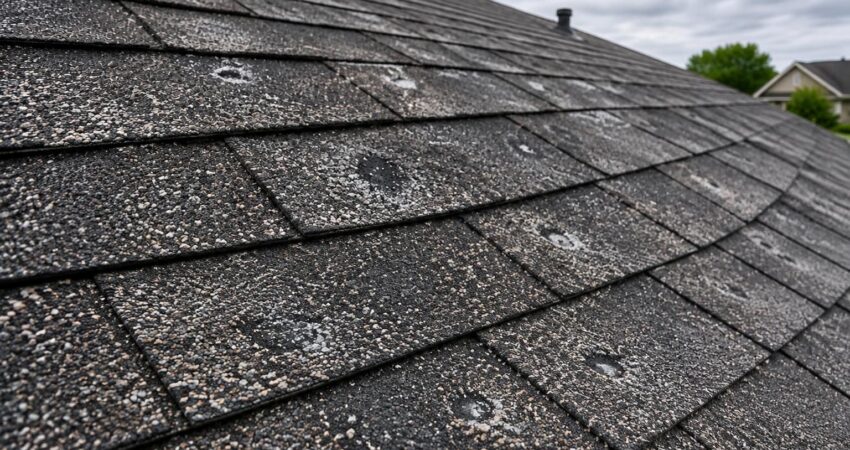
Hail damage on shingles usually shows up as dark, round bruises, bare patches where the granules have been knocked off, cracks, or spots that feel soft when you press them. Most of it is hard to see from the ground, which is why many homeowners only find out weeks after the storm, when a ceiling stain appears.
Not every dark spot is hail, and not every hit is a problem. What matters is whether the mat under the granules has been damaged. This guide covers what we look for on inspections, how to check safely, and when it is time to call someone.
Tier 1 Roofing & Exteriors has worked on roofs across Greater Cincinnati and Southwest Ohio for more than 21 years. Here is how we read a hail-hit roof.
What does hail damage look like up close?
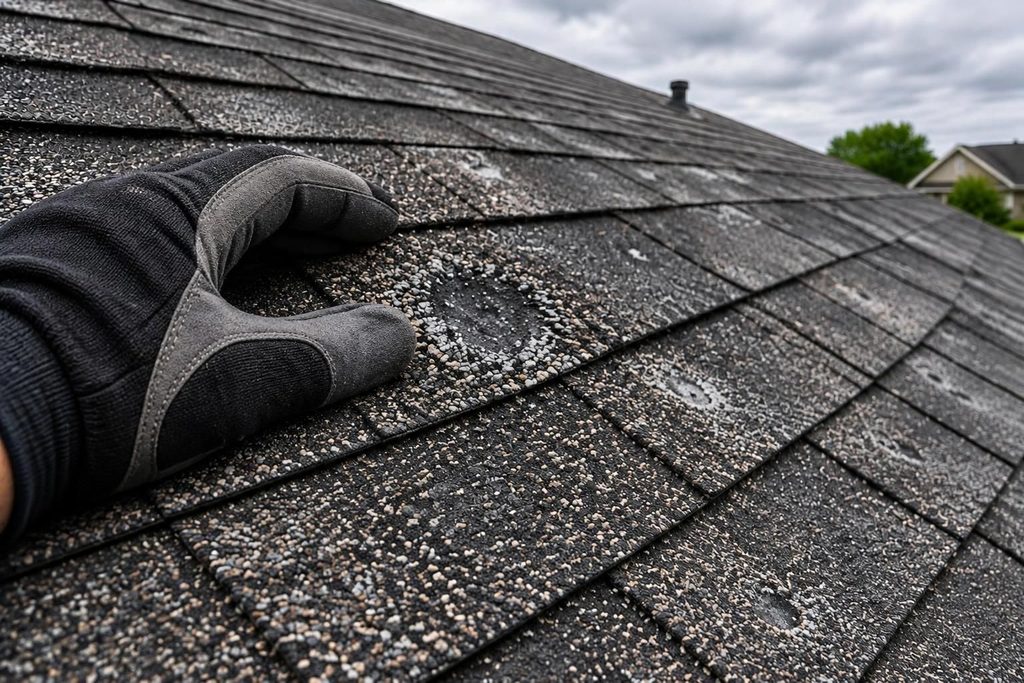
Up close, hail leaves marks that look a little different from other roof wear. Here are the signs we look for first:
- Dark, round or slightly oval spots where granules have been knocked loose
- Shiny, bare asphalt showing in the middle of the spot
- A soft, spongy feel when you press the area (a bruise)
- Small cracks or a split in the shingle mat
- Random scatter across the slope, with no repeating pattern
The reason these signs matter is simple. Granules are the shingle’s sunscreen. They protect the asphalt from UV rays and help shed water. When a hailstone knocks them off, the asphalt underneath dries out and ages faster than the rest of the roof. If the hit also fractures the fiberglass mat, the shingle can crack over time and let water in.
Haag Engineering, which has studied hail and roofing for decades, treats hail damage as functional when it reduces a roof’s ability to shed water or shortens its service life Haag Global. A cosmetic mark that does neither is a different conversation. That is why we look at the mat, not only the surface.
Hail size and wind both play a part. A stone around 25 mm across (roughly the size of a quarter) behaves very differently from one around 45 mm (about the size of a golf ball). Smaller hail driven by strong wind and falling in large numbers can still do real harm, especially on older asphalt shingle roofs that have gone brittle.
The bruise test and how to do it safely
The bruise test is the simplest check you can do. It also carries the most risk, so read the safety part first.
Start from the ground. Use binoculars or your phone’s zoom to scan each slope. If you can see bare spots or dented vents, you already have enough reason to call an inspector. You do not need to climb to confirm it.
If you decide to go up, stay on a stable ladder at the eave and do not walk on the roof. Skip it entirely if the roof is steep, wet, icy, or high. Ohio weather changes fast, and a fall costs far more than a roof.
To test a suspect spot, press gently with the flat of your fingertips. A hail bruise feels soft or spongy, like a bruise on a ripe peach. A scuff or surface mark feels firm. Do not push hard, scrape, or use a screwdriver. You can damage a healthy shingle and muddy the evidence if you file a claim.
Take photos before you touch anything. Put a coin next to the mark for scale, and note which slope it is on. Those photos are useful for your records and for the inspector.
What damage can you see from the ground?
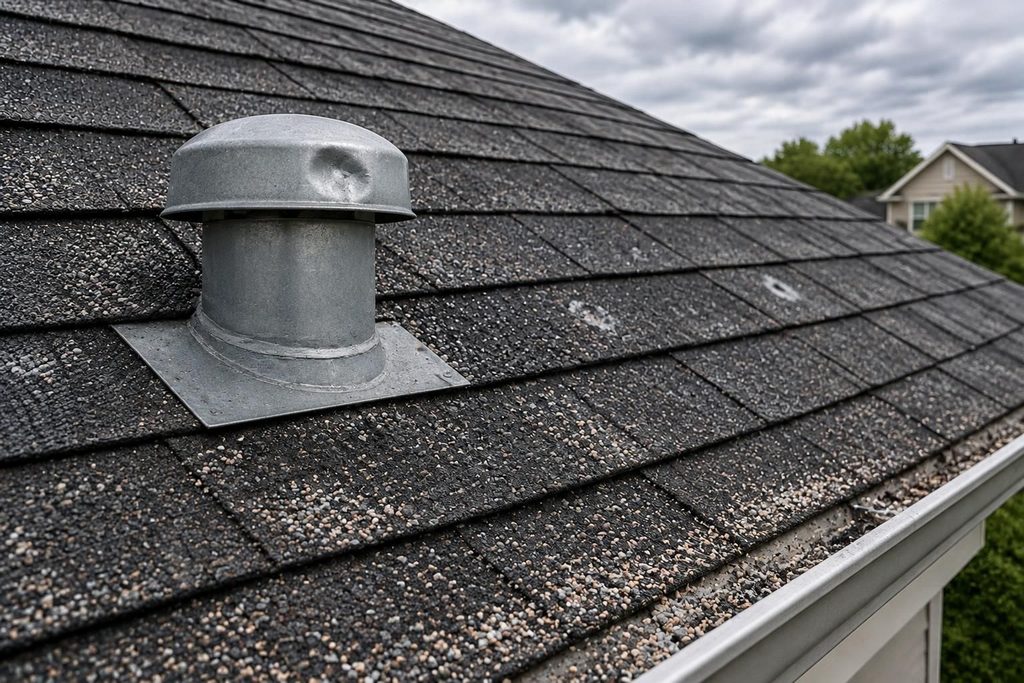
You can learn a lot without leaving the yard. Hail hits everything on your property, and some surfaces show it more clearly than shingles do.
- Gutters and downspouts. Look for dents in the metal and for dark, sand-like grit where the downspout empties. That grit is granules washed off the roof. Newer roofs shed a little in the first months, so you are looking for a noticeable new pile.
- Roof vents, flashing, and ridge caps. Soft metal records hail well. Round dents in vents or bent flashing are a strong hint that the shingles took hits too.
- Siding and trim. Cracked or pitted vinyl, dented aluminum, and chipped paint on fascia boards all tell you how hard the storm hit.
- Other objects. Dented AC fins, damaged window screens, and pockmarked patio furniture help show the direction and force of the storm.
Why does this matter? When dents on metal line up on the side of the house that faced the wind, the shingles on that slope deserve a close look. It is one of the first things we check when our crew inspects a roof.
Hail damage vs. normal wear
Here is the honest part: some wear looks a lot like hail damage, and the two are easy to mix up.
Blisters are small raised bubbles that pop and leave a crater. They can come from the manufacturing process or from trapped moisture and heat, and they are not hail. Age-related granule loss is usually widespread and uneven across a whole slope, and it shows up most on roofs near the end of their life. Foot traffic, a fallen branch, a scraped shingle from an old install, or a tree limb brushing the roof can all leave marks too.
Hail tends to leave scattered hits across several slopes, matched by dents on soft metal. Wear tends to follow sun exposure, roof age, or one specific cause. Those are general patterns, not rules. A roof can have both, and sometimes only a trained eye can tell them apart. That is the reason a professional inspection is the only way to be sure.
When should you call a professional?
Call after any storm that dropped hail on your area, especially if you notice any of these:
- A bruise from the fingertip test
- Bare spots or cracks on the shingles
- Dented vents, gutters, or flashing
- A pile of new granules at a downspout
- A ceiling stain or a leak after the storm
You can also call when nothing looks wrong. Hail can bruise a mat without leaving a visible sign from the ground, and the leak may not show for months. If you want a step by step guide, our hail storm roof inspection checklist walks through what to document.
When a roofer inspects after hail, we look at every slope, test suspect spots, check the metal, photograph the findings, and tell you plainly what we see. If the damage is minor, we will say so. If it is not hail, we will say that too.
Insurance and claims basics
Whether hail damage is covered depends on your policy and on the adjuster who reviews the claim. A roofer can document damage and explain what we see, but we cannot promise an approval.
A few things are worth knowing before you call your insurer. Many policies carry a separate wind and hail deductible, sometimes a percentage of the home’s value rather than a flat amount, according to the Insurance Information Institute. Policies also differ on whether they pay actual cash value or replacement cost, and many set a deadline for filing after a storm. Read yours, or ask your agent.
Keep your photos, the date of the storm, and any receipts for emergency repairs like a tarp. For background on how hail affects roofs, the Insurance Institute for Business & Home Safety publishes hail research for homeowners.
FAQ
What does hail damage look like on shingles?
Hail damage on shingles looks like dark, roundish spots where the granules have been knocked away, often with shiny black asphalt showing in the middle. The marks are scattered with no pattern, and they tend to show up on the slopes that faced the wind. Up close, you may see a small dent or a crack in the center. These marks matter because the granule layer protects the asphalt from sun and rain. Once it is gone, that spot ages faster than the rest of the roof. From the ground the marks are easy to miss, so a ladder at the eave or a close-up photo helps.
What does hail damage on shingles look like?
The clearest sign is a bruise. Press gently with your fingertips on a dark spot. If it feels soft or spongy, like a bruise on a ripe peach, the fiberglass mat underneath has likely been fractured. A firm spot that only looks scuffed is usually surface wear. Never push hard or use a tool, because you can damage a good shingle and make a claim harder. Take photos before you touch anything, and only test from a safe position. If the roof is steep, wet, icy, or high, skip the test and call an inspector instead.
What does hail damage look like on a shingle roof?
On a shingle roof, hail damage is rarely limited to one spot. Look for hits across several slopes, usually heaviest on the side that faced the storm’s wind. Hail also leaves marks on other parts of the house: dented roof vents, bent flashing, and chipped paint on fascia boards. When soft metal parts show dents, it is a strong hint that the shingles took hits too. A single damaged patch near a tree or chimney is more likely a different cause, such as a fallen branch or foot traffic. Photograph each slope so you can compare them.
What does hail damage look like on roof shingles?
Check the places where granules collect. After hail, gutters and downspout exits can hold dark, sand-like grit that washed off the shingles. A little grit is normal, especially on newer roofs, so look for a noticeable pile that is new. Granules on the ground below a downspout are another clue. Grit alone does not prove hail damage, but combined with bare spots on the shingles, it points to a problem worth a professional look. Compare what you see with how your gutters looked before the storm, if you can.
What does hail damage look like on asphalt shingles?
Asphalt shingles are a fiberglass mat coated in asphalt and covered in granules. Hail can bruise the mat or knock off granules without leaving a hole, so a roof may look fine and still leak later. How much damage you get depends on hail size, wind, the age of the shingles, and the slope of the roof. Older, brittle shingles break more easily. If you see bruises, bare spots, dented metal, or granules in the downspouts, call an inspector. Even with no visible signs after a big storm, an inspection is worth doing.
Your next step
If a recent storm hit your area, do not wait for a leak to tell you something is wrong. Take photos from the ground, check your gutters and vents, and schedule a professional look. If the inspection finds damage, our team handles roof repair in Cincinnati and can walk you through the options. You can reach us at 513-295-3487 or request a free estimate on our website.