
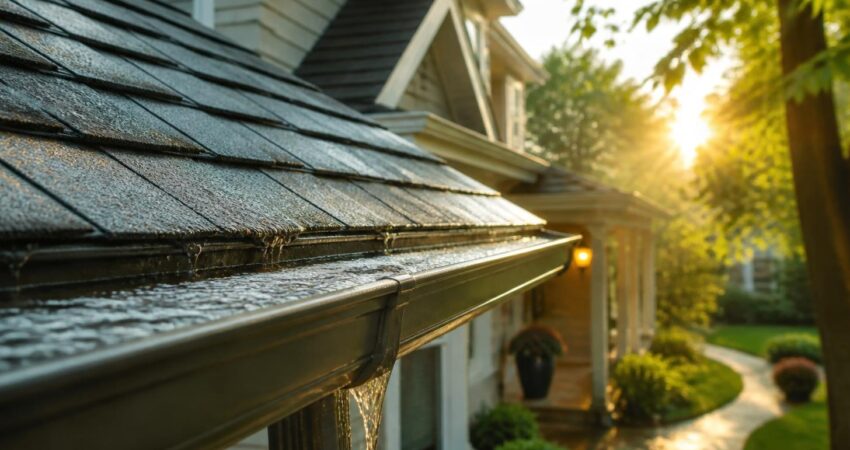
Gutters protect your home by collecting rainwater from the roof and carrying it through downspouts to a safe spot away from your foundation. Without a working system, water runs down siding, pools beside the foundation, and soaks the roof edge. Over time, that leads to rot, cracks, leaks, and repair bills that could have been avoided. A well-maintained gutter system, installed and repaired by a local contractor like Tier-1 Roofing and Exteriors, is one of the simplest ways to protect your whole home. You can learn more about our gutter installation and repair services on our Miscellaneous Exterior page.
Key Takeaways
- Gutters move roof runoff away from your home instead of letting it fall along the walls and soak the ground around the foundation.
- Clogged or damaged gutters are a common cause of roof edge rot, fascia damage, basement moisture, and siding stains.
- Downspouts should discharge several feet away from the foundation, and gutters should be cleared at least twice a year.
- Greater Cincinnati’s heavy spring rain and winter freeze-thaw cycles make gutter upkeep especially important for local homeowners.
What Do Gutters Actually Do?
A roof can shed a surprising amount of water in a single storm. Gutters catch that water at the roof edge, guide it along a gentle slope, and send it down through downspouts to the ground. The goal is simple: keep water moving away from the parts of your home that were never meant to get wet.
A complete system includes the gutters themselves, the downspouts, end caps and corners, hangers that hold everything to the fascia, and downspout extensions or splash blocks at the bottom. When any one of these fails, the whole system suffers.
How Gutters Protect Your Roof
Your roof is built to shed water, but the edge of the roof is the most exposed spot. Without gutters, water streams off the eaves, and some of it runs back under the shingles and onto the fascia and soffit. Moisture there can cause wood rot, peeling paint, and weakened roof decking.
Clogged gutters create a different problem. When leaves and debris block the flow, water backs up and sits against the roof edge. In winter, that standing water can freeze and form ice dams that push meltwater beneath shingles and into the attic. If you notice stains on ceilings, damp insulation, or shingles that look lifted near the edge, it’s worth having the roof checked. Our team handles roof repair for Cincinnati homeowners and can look at both the roof and the gutters in the same visit.
How Gutters Protect Your Foundation
The ground around your foundation takes a beating when roof water has nowhere to go. Rain that falls straight off the roof collects in the soil next to your walls. Cincinnati-area soil often holds moisture, and saturated ground puts pressure on foundation walls. Over time that can mean cracks, seepage, a musty basement, or settling that shows up as sticking doors and uneven floors.
Gutters and downspouts fix this by collecting the water and releasing it in a controlled place. A good rule of thumb is to extend downspouts at least four to six feet from the house, and to make sure the ground slopes away from the foundation rather than toward it.
How Gutters Protect Your Siding and Home Exterior
When water spills over the edge of a roof, it runs down your siding. Repeated soaking can cause streaks, peeling paint, mold, and warped or loose siding panels. It also splashes soil and mulch onto the lower walls, which stains the exterior and can invite pests.
Gutters keep the water off your walls, which protects your siding, trim, windows, and doors. They also protect what’s below: landscaping, walkways, patios, and decks. Water that pours off an unguttered roof can wash out flower beds, erode soil, and leave slippery spots on steps and walkways.
Signs Your Gutters Are Damaged or Failing
Most gutter problems show up well before major water damage does. Walk around your home after a rainstorm and look for these signs:
- Water spilling over the sides or pouring down in sheets instead of flowing to the downspout
- Sagging sections or gutters pulling away from the fascia
- Cracks, rust spots, holes, or visible gaps at the seams
- Peeling paint or staining on the siding below the gutter line
- Plants, grass, or shrubs sprouting from the gutter
- Pooling water, soil erosion, or damp spots near the foundation
- Icicles or heavy ice buildup along the roof edge in winter
If you see more than one of these, the system likely needs repair or replacement.
Gutter Maintenance Tips for Ohio Homeowners
Regular care keeps gutters working and extends their life. A simple routine goes a long way:
- Clean them at least twice a year. Late spring and late fall are good times, and homes near mature trees may need more frequent cleaning.
- Flush the downspouts. Run a hose through them to confirm water flows freely and exits away from the house.
- Check the slope and hangers. Gutters should tilt slightly toward the downspouts, and the hangers should be tight.
- Seal small leaks early. Minor seam leaks are easier and cheaper to fix than a section that has rusted through.
- Trim overhanging branches. Less debris means fewer clogs.
- Inspect after severe weather. Wind, hail, and heavy snow can loosen or dent gutters.
Gutter Guards: Are They Worth Considering?
Gutter protection systems, often called gutter guards, help keep leaves and larger debris out of the gutter while letting water in. They can reduce how often you need to clean, especially if your home sits under trees. They don’t eliminate maintenance entirely, since fine debris can still build up, but they are a practical option for many homes.
When to Repair and When to Replace Your Gutters
Repair often makes sense for isolated problems such as a loose hanger, a small leak at a seam, or a single damaged section. Replacement is usually the better choice when:
- The gutters are rusted, cracked, or sagging along most of their length
- Repairs keep coming back every season
- Water damage is already showing on the fascia, siding, or foundation
- The system was never sized properly for your roof, and overflows during normal rain
A professional inspection can tell you which path fits your home. New gutters are sized and sloped to handle your roof’s runoff, with downspouts placed where they’ll do the most good.
Local Gutter Help Across Greater Cincinnati
Tier-1 Roofing and Exteriors serves homeowners and property owners throughout Greater Cincinnati and Southwest Ohio, including Monroe, Mason, West Chester, Loveland, and Dayton. Because we handle roofing, siding, and other exterior work, we can look at how your gutters, roof, and walls work together rather than treating each in isolation. That is especially helpful if you already see water damage and aren’t sure where it’s coming from.
If you want a second opinion on your gutters, or you’re ready to replace them, we’re here to help with a clear plan and straightforward recommendations. Explore our full range of residential and commercial exterior services, or call us at 513-295-3487 to schedule a visit.
Ready to protect your home from water damage? Get Estimate today and we’ll respond within 24 hours.
Frequently Asked Questions
How do gutters protect your home?
Gutters collect rainwater from your roof and direct it through downspouts away from your foundation. This keeps water from damaging your roof edge, siding, landscaping, and basement or crawl space.
What happens if you don’t have gutters?
Without gutters, rain pours off the roof edge and soaks the ground next to your foundation, splashes onto siding, and erodes landscaping. Over time, that can cause foundation cracks, basement moisture, rotting trim, and stained or damaged siding.
Can clogged gutters damage your roof?
Yes. When gutters clog, water backs up against the roof edge and can seep under shingles and into the fascia and decking. In winter, backed-up water can freeze and contribute to ice dams.
How often should gutters be cleaned?
Most homes should have gutters cleaned at least twice a year, usually in late spring and late fall. Homes surrounded by trees may need cleaning more often.
How far should downspouts extend from the house?
Downspouts should discharge at least four to six feet from the foundation, with the ground sloping away from the house.
When should I replace my gutters instead of repairing them?
Consider replacement when gutters are rusted, cracked, or sagging across much of the system, when repairs keep recurring, or when water damage is already appearing on the fascia, siding, or foundation.
Do gutter guards stop all maintenance?
No. Gutter guards reduce how much debris enters the gutter, but fine debris can still build up. Occasional inspection and cleaning are still recommended.